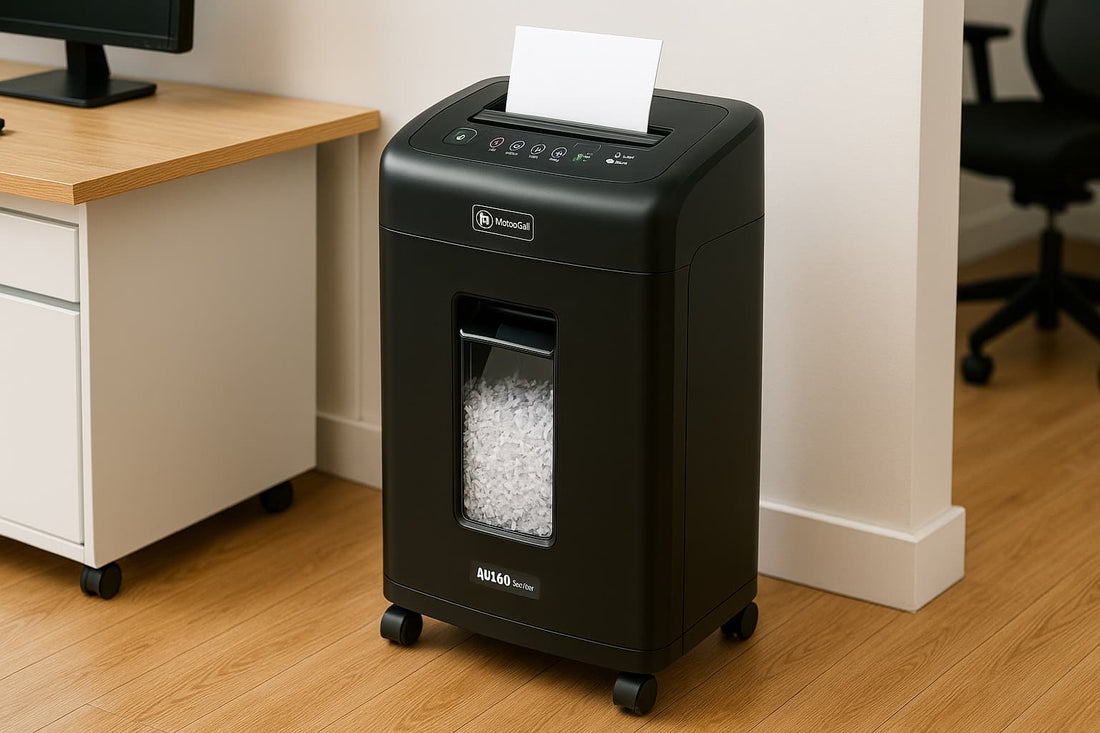
Compact shredders are bought because the room is tight, so the first check is physical fit. Measure the floor area beside the desk, under a credenza, near a printer, or inside a small copy corner. Include the space needed to remove the bin, feed paper comfortably, and keep cords out of walkways. A shredder that technically fits can still be annoying if it blocks a drawer, catches knees, or forces people to bend awkwardly every time they shred a receipt. Small shredders are best for light, steady use. Look at how many sheets the office actually destroys each day, not the maximum number someone might feed once. A compact model with a modest sheet rating can work well for occasional invoices, labels, and personal paperwork. It will frustrate users if they expect it to handle large end-of-month purges, stacks of files, or continuous department use. Strip-cut shredders are fast and simple but less private. Cross-cut and micro-cut models create smaller particles and are better for confidential paperwork, client details, financial notes, and HR documents. The right choice depends on what the small office handles. Do not overbuy for ordinary drafts, but do not underbuy if sensitive records are common. Compact shredders often need cooldown breaks. Duty cycle tells you how long the unit can run before resting. This matters in small offices where one person may save shredding for Friday afternoon and then try to process a full pile at once. A model that overheats quickly may still be excellent for daily maintenance shredding if expectations are clear. A compact shredder is often placed near desks because there is nowhere else to put it. That makes noise more important. Check whether shredding will interrupt calls, meetings, reception work, or focused tasks. If noise is a concern, choose placement carefully and create a habit of shredding during natural breaks rather than during calls. A small bin fills faster, so it should be easy to remove, empty, and replace. Window indicators, pull-out bins, and clear fill lines reduce mess. If people have to lift a heavy cutting head or fight a flimsy bin, they may overfill it. Overfilled bins create jams, paper dust, and frustration that shortens the life of the shredder. Shredder oil, cleaning sheets, and basic jam prevention matter even for compact models. Users should avoid feeding thick envelopes, adhesive labels, large clips, and too many sheets at once unless the manual allows it. A small note near the shredder can prevent most jams: feed straight, do not force stacks, empty the bin early, and let the motor cool. A compact shredder should be close enough for quick use but not so exposed that it clutters the room. Near a mail station, small printer, or admin desk often works. Under-desk placement is tidy, but only if the user can feed paper without crawling under the desk. The best spot balances convenience, safety, cord management, and visual neatness. This resource explains editorial criteria, practical small-space fit checks, privacy planning, and responsible shredder research.
About This Compact Shredder Guide
Trust, contact, and privacy information for this compact shredder support resource.